


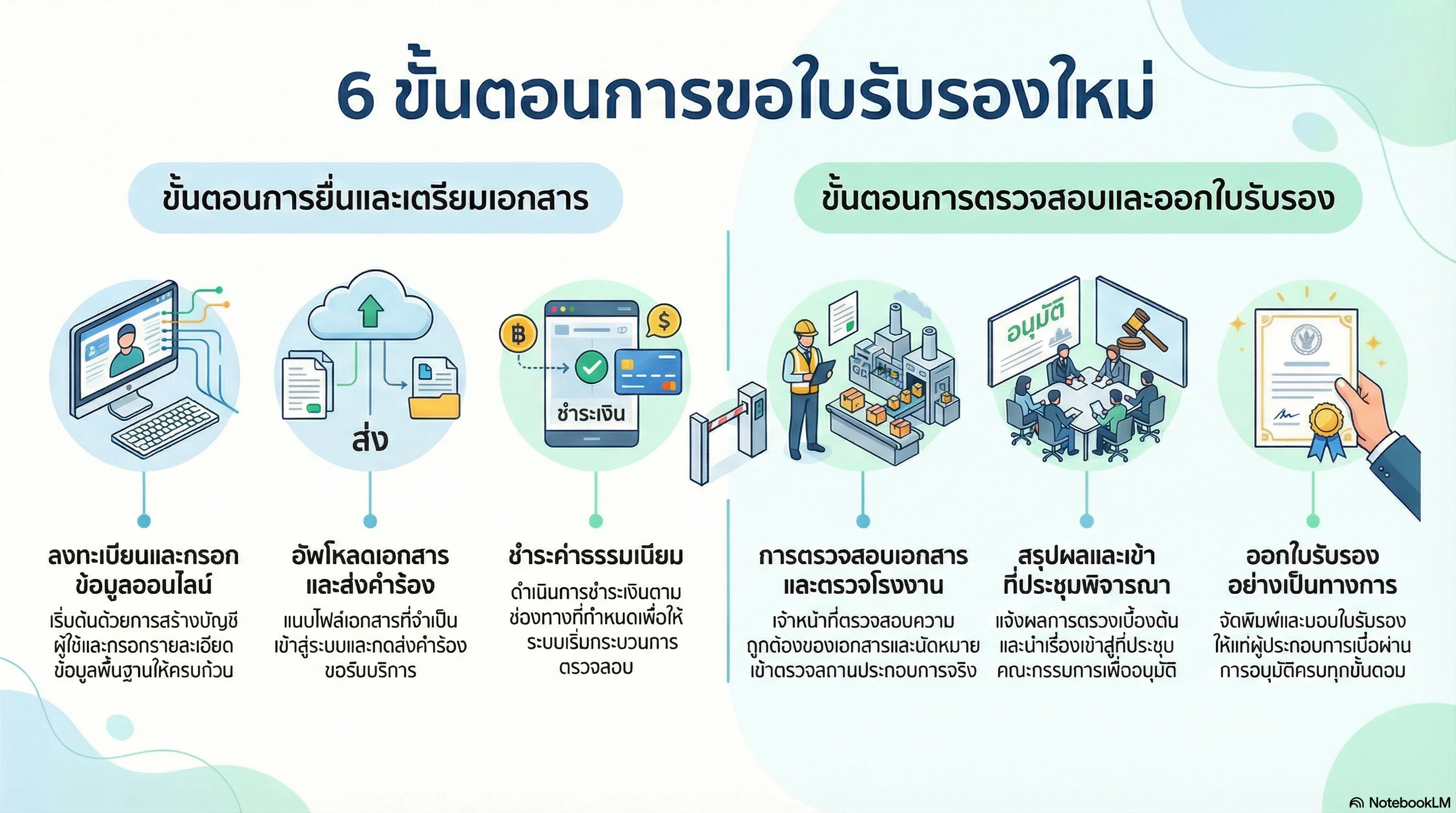

Here's an explanation of the Halal certification process by the Central Islamic Council of Thailand (CICOT):
The process of obtaining Halal certification from the Central Islamic Council of Thailand (CICOT) requires strict adherence to specific steps by entrepreneurs to ensure that their products or services comply with Islamic law (Halal). The main steps can be summarized as follows:
Steps for Halal Certification:
1. Initial Preparation
- Expressing Intention: The entrepreneur expresses their intention to obtain Halal food standard certification.
- Consultation: There may be an assessment and consultation phase conducted by a project consultant to prepare the establishment.
- Halal Training: Officials from the Halal Food Standard Institute will organize training for entrepreneurs to provide them with a comprehensive understanding of Halal standards, regulations, and related practices.
- Documentation and Production Process Development: The entrepreneur must prepare a documentation system and adjust their production processes to comply with Halal food standards, including preparing all required documents as specified by CICOT.
2. Application Submission and Document Review
- Application Submission: The entrepreneur submits the application for certification along with supporting documents and product samples to the Central Islamic Council of Thailand (CICOT) or the Provincial Islamic Committee Office (PICO), as applicable. (Currently, online submission is also available).
- Required Documents: Necessary documents typically include:
- Halal Certification Mark Application Form.
- Copy of ID card/house registration (for individuals) or company registration certificate/company registration certificate from the Department of Business Development (for legal entities).
- Relevant licenses, such as factory establishment license, food production license (Or.2).
- Food formula registration application (Or.17) and food formula registration certificate (Or.18).
- Documents detailing production methods, procedures, raw materials, and ingredients.
- Product samples.
- Map of the factory/establishment location.
- Halal Manual, which describes the Halal production and control system within the establishment.
- Other documents as specified by CICOT.
- Document Verification: Officials or the Provincial Islamic Committee will review the documents and request corrections if any deficiencies are found.
- Fee Payment: Payment of Halal certification inspection fees and other related charges.
3. Establishment Inspection
- Inspection Appointment: CICOT will schedule a date and time for the inspection of the factory/establishment.
- Certification Inspection: A team of inspectors from the Halal Affairs Department will inspect the production site, raw materials, production processes, packaging, storage, and sales locations to ensure that all steps comply with Islamic principles and the specified Halal standards.
- Laboratory Testing: In some cases, product samples may be taken for laboratory analysis to confirm the absence of prohibited ingredients according to Islamic law.
4. Consideration and Approval
- Halal Affairs Committee Resolution: The Halal Affairs Committee will review the inspection results.
- Central Committee Meeting: The inspection results will be presented to the Central Islamic Council of Thailand for approval.
- Notification of Results: Once approved by the Central Islamic Council of Thailand, the entrepreneur will be notified, and the Halal certificate and mark will be issued.
Additional Information:
- Consultant: Entrepreneurs should consider having a consultant or special consultant for their establishment, who can assist in preparing the system and documents correctly according to the requirements.
- Renewal: The Halal certificate has an expiry date. Entrepreneurs must submit documents for renewal in advance before the certificate expires. If the deadline is missed, a new application fee will be charged.
- Adding Product Items: If new product items are to be added, the entrepreneur must submit a request and follow the prescribed procedures.
- Regulations and Requirements: Entrepreneurs should thoroughly study and understand the regulations of the Central Islamic Council of Thailand concerning Halal Affairs B.E. 2558 and the Halal certification manual.
Entrepreneurs can contact CICOT for more information, download various forms and manuals from their website (www.halal.or.th), or directly contact the relevant officials.
Interest
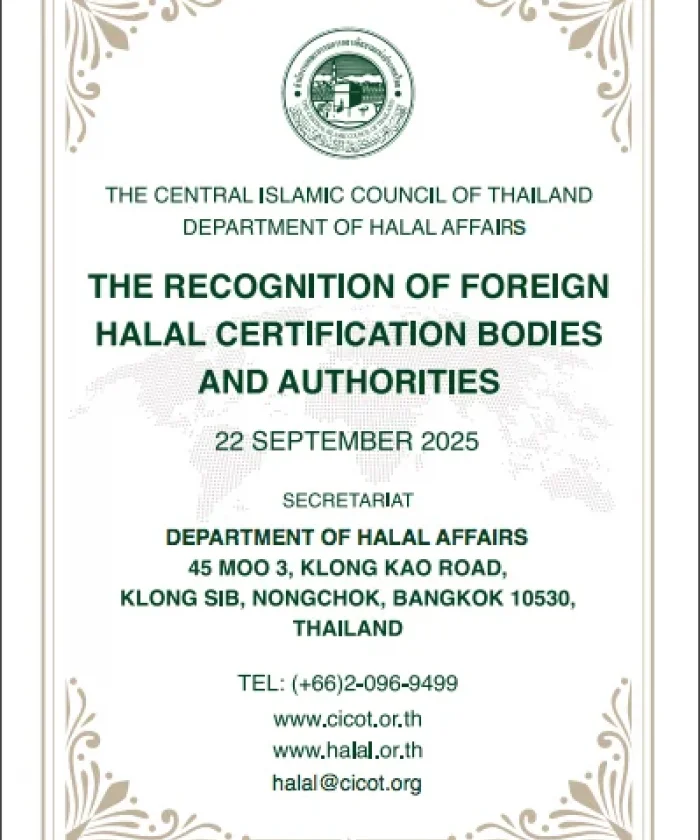
Announcement of the list of international halal certification organizations recognized by the Central Islamic Committee of Thailand.
Announcement of the list of international halal certification organizations recognized by the Central Islamic Committee of Thailand.

Thailand as a Muslim-friendly destination.
Thailand as a Muslim-friendly destination.
Judgment (Fatwa) Chularatchamontri No. 11/2014 regarding fasting holders who are unconscious
Judgment (Fatwa) Chularatchamontri No. 11/2014 regarding fasting holders who are unconscious